

How orphelins à cheval differs from orphelins en plein in bitcoin roulette?
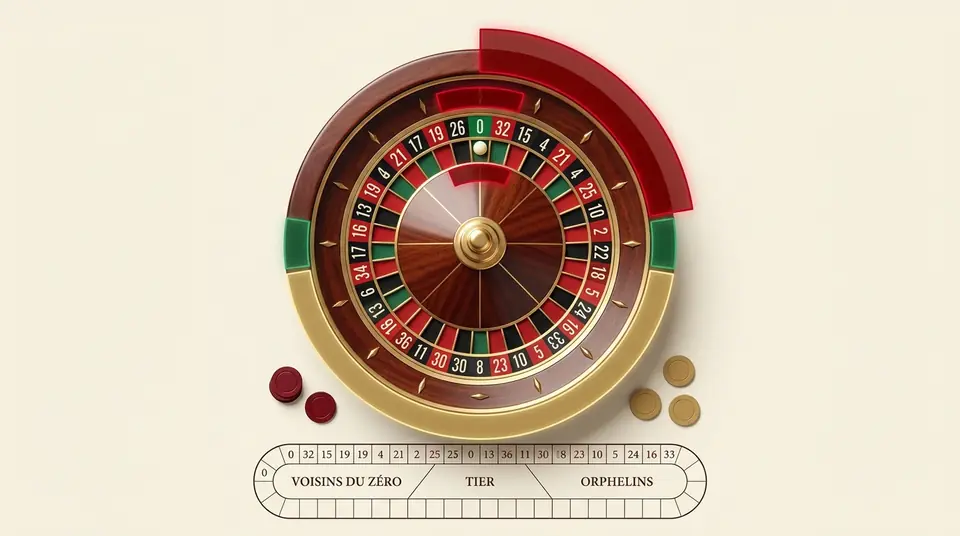
Orphelins is a called bet covering eight numbers that sit in two short wheel segments between the voisins and tiers arcs. Two versions of this bet exist, and they differ in how chips are placed across the same eight numbers. There are two formats of btc roulette called bet formats used on French roulette tables, where the difference between à cheval and en plein determines how the return is calculated when a number is spun.
Place chips fully across the eight numbers
Orphelins en plein uses eight chips, one straight-up chip on each of the eight numbers: 1, 6, 9, 14, 17, 20, 31, and 34. Every number receives its own dedicated chip, and every chip pays 35 to 1 independently if its number is spun. Net return when any number hits is 35 minus seven losing chips, equal to 28 units from the eight-chip outlay.
Win probability for orphelins en plein is 8 in 37, approximately 21.62 per cent per spin. Eight chips cover eight pockets individually, with no sharing between adjacent numbers. Placement is the simplest version of orphelins: identify each number, place one chip on each, and each chip functions as a standalone straight-up bet with no dependency on adjacent positions. House edge per chip is 2.70 per cent. Eight chips produce eight independent edge exposures per spin. Total expected loss per spin across the eight chips is eight times the per-chip expected loss at the chosen denomination.
How does the horse place chips and return?
Orphelins à cheval uses five chips rather than eight. Instead of placing a straight-up chip on every number, the à cheval version uses splits to cover pairs of adjacent numbers with single chips, reducing total chip count while maintaining coverage of all eight numbers.
Placement follows the standard orphelins à cheval configuration.
- One straight-up chip on number 1, which has no adjacent orphelins numbers available for a split.
- One split chip on 6 and 9.
- One split chip on 14 and 17.
- One split chip on 17 and 20.
- One split chip on 31 and 34.
Number 17 appears in two split pairings, covered by both the 14-17 chip and the 17-20 chip. All other numbers are covered by exactly one chip.
Differences in return calculation
Return per winning spin differs substantially between en plein and à cheval because the chip count and bet types are different.
- Orphelins en plein, any number hit: 35 to 1 on one chip, seven chips lost. Net gain is 28 units from eight chips.
- Orphelins à cheval, number 1 hit: 35 to 1 on the straight-up chip, four chips lost. Net gain is 31 units from five chips.
- Orphelins à cheval, numbers 6, 9, 14, 20, 31, or 34 hit: 17 to 1 on one split chip, four chips lost. Net gain is 13 units from five chips.
- Orphelins à cheval, number 17 hit: two split chips win simultaneously at 17 to 1 each, three chips lost. Total return from both winning chips is 34 units, minus three losing chips. Net gain is 31 units from five chips.
Win probability is identical for both versions at 8 in 37, because the same eight pockets are covered regardless of which chip configuration is used. The à cheval version costs fewer chips per spin and produces different net unit returns depending on which specific number hits.